Training Room 2
1. Training Room 2
1.5. Page 6
Training Room 2: Inside Out—How the Body Works
Why Is Movement Important?
You’ve heard the message that movement is important for your health, but the message isn’t just about exercise. Human bodies need to move to live.
-
Movement of the skeletal muscles causes corresponding movement in internal organs, which helps the organs perform their functions.
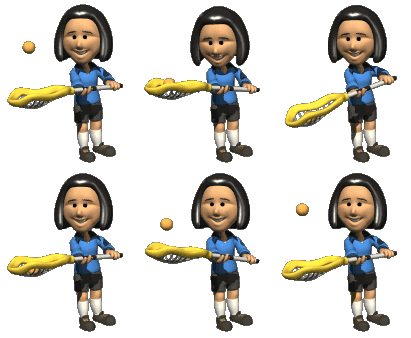
© 2012 Jupiterimages Corporation
- Movement of muscles exerts force on bones, which causes the bones to produce important minerals, such as calcium, to help keep bones strong.
- Lack of movement in bedridden patients can cause muscles to shrink. It can also cause bedsores due to lack of blood circulation.
- Muscles play an important role in maintaining body temperature by creating heat.
- The human body actually craves movement in order to aid processes such as immunity, digestion, circulation, detoxification, hormone regulation, pregnancy, and metabolism.
How the Human Body Works to Create Movement
Muscular System
Watch “Muscular and Skeletal Systems” to learn about the human muscular system. Advance the timeline slider to the 12:00-minute mark of the video clip and watch from there to the end of the video.
To find out more, search the Internet using the term “how muscles work.”
The muscular system refers to skeletal muscle tissue and the connective tissues that make up individual muscles, such as the biceps. Cardiac muscle in the heart is part of the circulatory system, and smooth muscle in the digestive tract is part of the digestive system.
Skeletal muscle creates movement by exerting force on tendons, which then pull on bones. Skeletal muscles can only pull on bones; they cannot push. Skeletal muscles usually occur in the body in pairs. When one muscle in the pair contracts, or shortens, it pulls on the bone, creating movement. The opposite movement is created when the opposing muscle contracts.
For example, when the biceps contract, they curl the arm by pulling the forearm toward the shoulder. When the triceps contract, they straighten the arm by pulling the forearm down.
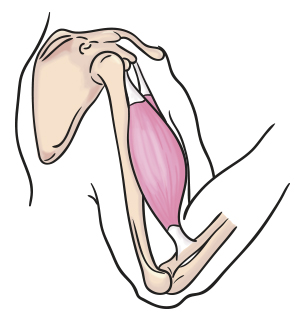
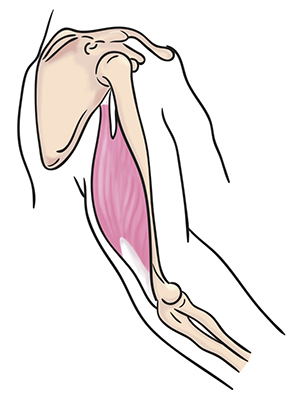
Movement, of course, is much more complex. Have you heard the saying “It takes more muscles to frown than it does to smile”? Do you believe the statement? Answers to this puzzle vary. Exactly how many muscles does it take to frown versus to smile?

Hemera/Thinkstock
Search the Internet for “how many muscles does it take to smile.” Surprised?