Training Room 2
| Site: | MoodleHUB.ca 🍁 |
| Course: | HSS1010: Health Service Foundations |
| Book: | Training Room 2 |
| Printed by: | Guest user |
| Date: | Friday, 19 December 2025, 3:28 AM |
Description
Created by IMSreader
1. Training Room 2
Training Room 2: Inside Out—How the Body Works
Introduction

iStockphoto/Thinkstock

iStockphoto/Thinkstock
The human body is an amazingly complex machine. Body parts interact with body systems to produce an organism that is capable of many functions.
In Training Room 2 you will study the following topics:
- Levels of Structural Organization
- Homeostasis
- Muscles of the Human Body
- How the Human Body Works to Create Movement
In Training Room 2 Project you will create one of three suggested 3-D models: either the muscular system, the levels of organization of the human body, or the interaction of body systems during a sustained activity. Remember to look at Training Room 2 Project now so that you know what will be expected of you before you work through Training Room 2.
Outcomes
Training Room 2 addresses the following outcome:
- Explain basic principles of anatomy, physiology, and disease related to systems of the human body
- identify common prefixes and suffixes related to anatomy, physiology, pathology, and the terminology describing body systems
- define the terms anatomy, physiology, pathology, and homeostasis, including anatomical directional terms and planes of division
- identify all of the systems of the human body using medical terminology
- outline the organization of the body from chemicals to the whole body, including identification of the role of cells, tissues, organs, and body cavities
- explain the interrelationship between various body systems, including negative and positive feedback in maintaining homeostasis
- define terms and concepts related to disease and treatment of disease
- compare the methods of transmission for Hepatitis A, Hepatitis B, Hepatitis C, and HIV
- describe basic safety precautions for the prevention of communicable diseases; e.g., related to health care and community support workers, sports, travel
Focus
Keep these guiding questions in mind as you work through Training Room 2:
- How does the human body work?
- How do my muscles create movement?
- How does physical activity benefit my body?
1.1. Page 2
Training Room 2: Inside Out—How the Body Works
Anatomy and Physiology
The two branches of science that will help you understand your body parts and functions are anatomy and physiology. Anatomy is the study of structure and the relationships among structures—in this case, structures of the body. Physiology studies the function of body parts and how they work.
Anatomy and physiology cannot be studied in isolation from each other. Each part of the body is structurally designed to carry out certain functions. So, structure (anatomy) and function (physiology) are studied together.
For example, bones function as rigid supports for the body. Glands perform the function of manufacturing chemicals that stimulate the bones to build up minerals so they can remain strong. Other chemicals cause bones to lose minerals that are carried out in the blood to other parts of the body, where those minerals are used for activities such as muscle contraction and nervous activity.
Pathology is the scientific study of the nature of disease and its causes, processes, development, and consequences. Pathological anatomy is the study of structural changes related to disease.
1.2. Page 3
Training Room 2: Inside Out—How the Body Works
Levels of Structural Organization

Jack Hollingsworth/Photodisc/Thinkstock
Explore Structural Levels of the Body, which introduces the levels of organization and systems (chemical, cellular, tissue, and organ) of the human body.
© alphaspirit/shutterstock
Body Systems
Work through Our Body Systems to learn about body systems and their basic functions.
Thinking About Body Systems
Play “Match-A-Body System” or one of the many other games in the Anatomy Arcade website. Note that the game you want will load after a 15-second advertisement to play another, unrelated game.
1.3. Page 4
Training Room 2: Inside Out—How the Body Works
Homeostasis
Jupiterimages/Comstock/Thinkstock
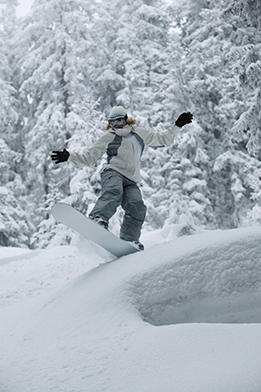
One of the ways body systems work together is to maintain a constant environment no matter what is happening on the outside. Human bodies are faced with a constantly changing environment, on both the outside and the inside. Cells function best when conditions remain as consistent as possible.
Homeostasis works through what is termed negative feedback. Think about the thermostat in your house. It is set to a constant temperature. When the temperature outside goes down, your thermostat recognizes a change in the external environment and sends a signal to your furnace to turn on. Once the temperature in your house returns to the set temperature, another signal is sent to stop the furnace.
Homeostasis in your body is primarily controlled by your brain (nervous system) and your hormones (endocrine system). Some examples of homeostasis in your body are
- temperature control
- blood-sugar control
- respiratory rate
- blood pressure
- water balance
- detoxification
- heart rate
View “Homeostasis” to see how homeostasis works to control your body temperature.
1.4. Page 5
Training Room 2: Inside Out—How the Body Works
Muscles of the Human Body
Ryan McVay/Photodisc/Thinkstock
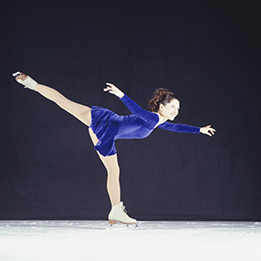
There are over 600 skeletal muscles in the human body. (Don’t worry—you don’t have to learn them all.) You probably already know the names of some of the major muscles because they are part of common terminology you hear every day.
How many muscles can you name right now? Do a quick scan of your body and your memory. Which muscles do you already know? You have probably heard of these muscles:
- biceps
- glutes (short for gluteals)
- quads (short for quadriceps)
Naming Muscles
Muscles are generally named according to certain characteristics. Work through “Naming Muscles” to learn some of these characteristics.
Muscles of the Body
Work through these two activities to locate and identify the muscles in the front and back of your body:
You won’t remember muscle names just by reading them once. One way to help remember the names of muscles is to think about which muscles you are using as you perform daily tasks.
Another way is to play games with the muscle names. Search the Internet using the terms “anatomy games” or “muscle anatomy practice,” visit the following websites, or ask your teacher for other suggestions.
- Anatomy Arcade “Poke-a-Muscle” (Remember to wait 15 seconds for the advertisement for the unrelated game.)
- BBC Science Interactive Body “Muscles”
- Discovery “Human Body Learning Experience”
- KidsHealth “Your Muscles”
- Tufts Medical Center “Anatomy Explorer”
1.5. Page 6
Training Room 2: Inside Out—How the Body Works
Why Is Movement Important?
You’ve heard the message that movement is important for your health, but the message isn’t just about exercise. Human bodies need to move to live.
-
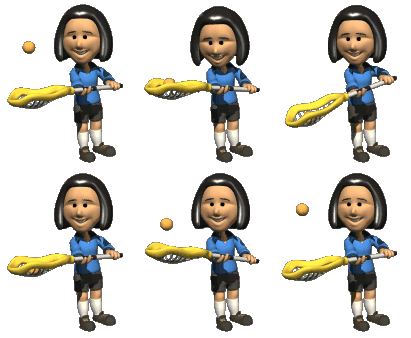
Movement of the skeletal muscles causes corresponding movement in internal organs, which helps the organs perform their functions.
© 2012 Jupiterimages Corporation
- Movement of muscles exerts force on bones, which causes the bones to produce important minerals, such as calcium, to help keep bones strong.
- Lack of movement in bedridden patients can cause muscles to shrink. It can also cause bedsores due to lack of blood circulation.
- Muscles play an important role in maintaining body temperature by creating heat.
- The human body actually craves movement in order to aid processes such as immunity, digestion, circulation, detoxification, hormone regulation, pregnancy, and metabolism.
How the Human Body Works to Create Movement
Muscular System
Watch “Muscular and Skeletal Systems” to learn about the human muscular system. Advance the timeline slider to the 12:00-minute mark of the video clip and watch from there to the end of the video.
To find out more, search the Internet using the term “how muscles work.”
The muscular system refers to skeletal muscle tissue and the connective tissues that make up individual muscles, such as the biceps. Cardiac muscle in the heart is part of the circulatory system, and smooth muscle in the digestive tract is part of the digestive system.
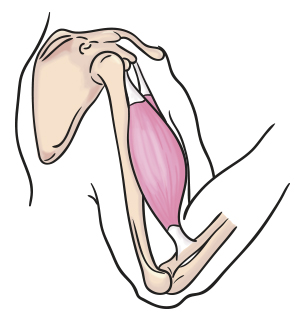
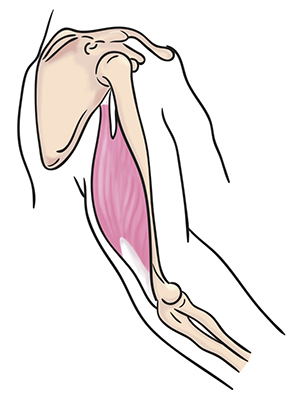
Skeletal muscle creates movement by exerting force on tendons, which then pull on bones. Skeletal muscles can only pull on bones; they cannot push. Skeletal muscles usually occur in the body in pairs. When one muscle in the pair contracts, or shortens, it pulls on the bone, creating movement. The opposite movement is created when the opposing muscle contracts.
For example, when the biceps contract, they curl the arm by pulling the forearm toward the shoulder. When the triceps contract, they straighten the arm by pulling the forearm down.
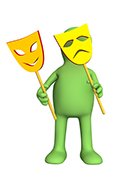
Movement, of course, is much more complex. Have you heard the saying “It takes more muscles to frown than it does to smile”? Do you believe the statement? Answers to this puzzle vary. Exactly how many muscles does it take to frown versus to smile?
Hemera/Thinkstock
Search the Internet for “how many muscles does it take to smile.” Surprised?
1.6. Page 7
Training Room 2: Inside Out—How the Body Works
© CLIPAREA.com/47213817/Fotolia,
© CLIPAREA.com/45256135/Fotolia
Landmarking
To describe the location of structures in the body and the direction of movement, a point of reference is used. This point of reference is called anatomical position. If you stand in front of a mirror with your hands at your sides and the palms of your hands facing the mirror, you are in anatomical position.

Using anatomical position as a starting point, common directional terms are used to describe the location of body structures. Pair up with a partner and take turns describing body parts in relation other body parts. Example: Your mouth is inferior to your nose.
Here are a few body parts to get you started:
- eyes
- toes
- hip bones
- spine
- intestines
- brain
Planes in the Body

adapted from: © Steve Young/18171610/Fotolia
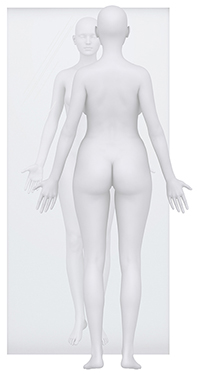
The structure of the body can also be described using planes—imaginary flat surfaces that run through the body and divide the body into sections. Planes are used to describe direction of movement.
- The sagittal, or median, plane runs vertically through the middle of the body, dividing it into right and left halves.
- The frontal, or coronal, plane runs vertically and divides the body into front (anterior) and back (posterior) halves.
- The horizontal, or transverse, plane runs horizontally and divides the body into upper (superior) and lower (inferior) halves.
Watch “Anatomical Planes and Spatial Relationships in the Human Body” and explore “Planes of the Body.”
Now test your knowledge by completing Describing Location Self-Check.
Types of Movement and Joint Actions
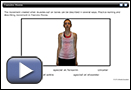
The movement created when muscles pull on bones can be described in several ways. Practise naming and describing movement in Francine Moves.

Ryan McVay/Lifesize/Thinkstock
Complete Move Your Body. You will need a big mirror where you can see yourself move.
 Save your completed document in your course folder.
1.7. Page 8
Training Room 2: Inside Out—How the Body Works
Training Room 2 Summary
Ting Hoo/Photodisc/Thinkstock
In this training room you explored the language and organization of the human body, the muscular system, and the benefits of moving.
You will use the information you gathered to create a model to teach classmates about body systems. Your model can be of the muscular system, the levels of organization of the human body, or how body systems interact during an activity that requires muscular movement. Move to the Training Room 2 Project to get started.
1.8. Project
Training Room 2: Inside Out—How the Body Works
Project
In Training Room 2 Project you will consider the structure of the human body and its systems, and you will discover how those systems work together.
You will act as a medical student who has been asked to teach some classmates how the body works. Choose and create one of the following models. If you have another idea for a model, talk to your teacher.
- a three-dimensional model of the muscular system
- a three-dimensional model of the levels of organization of the human body
- a model of how all body systems interact during an activity that requires muscular movement
You will present how your model works to your teacher and/or classmates through a series of pictures, a slide show, a video, or another medium. You could give a live or video-conferenced demonstration.
You will also respond to Formative Self-Assessment Reflection Questions.
Suggested Time
Project Skill Level: basic, intermediate
Estimated Time: 5 to 6 hours
Materials
You will need the following supplies:
- materials to create your model
- paper, sticky tabs, or other removable labels for your model
- digital camera, webcam, or other method of transmitting your project to your teacher
Assessment
Your teacher will use the Training Room Project Rubric to assess the extent to which you have
- followed the directions given for the project
- collected, analyzed, and interpreted information appropriately with supporting details
- organized information in an appropriate way
- communicated ideas clearly and correctly, including citing references
- presented your ideas in a clear and appealing format
Real World
Knowing the human body and understanding how the human body works is important. Your knowledge and understanding will help you make important lifestyle decisions.
Directions
Step 1: Work through Training Room 2.
Step 2: Choose which model you will create, and create your model. Label your model with tabs that are removable for study.
Your project must be a physical model with removable labels so that it could be used to study the system you have chosen. You might use modelling clay, paper, or household objects that represent parts of each system. You might include a diagram, a worksheet, flash cards, a game, or a self-quiz. Be as creative as you like. This project is meant to help your classmates learn about the component you have chosen. Whatever your format, ensure your assignment provides the necessary information and references.
Step 3: Talk to your teacher about how you will present your model, whether it be through a submission (e.g., a slide show or a series of pictures that you send to your teacher) or through a live or recorded demonstration.
Step 4: Prepare your presentation and present your model to your classmates, teacher, or invited guests.
Step 5: Respond to the Formative Self-Assessment Reflection Questions. Save your responses in your project subfolder. Name the file “TRR2_Self_Reflections.”
Step 6: Submit your reflection to your teacher for assessment.